
Grupo Vitácea Hijuelas continues to advance in consolidating its international operations and accessing the most modern technologies in global fruit growing. In this context, Plant Production Manager, Evaldo Melo, recently conducted a technical visit to the Huelva region in southern Spain, one of the world's leading soft fruit production hubs, through our partner EmCocal.
Huelva: a Strategic Hub for European Fruit Growing
Located in the autonomous community of Andalusia, Huelva is recognised as Spain's main strawberry production centre, accounting for around 97% of national production. Spain, in turn, ranks amongst Europe's largest producers, with strong prominence in supplying the European Union market, especially during winter and early spring.

Beyond strawberry, the region has expanded soft fruit production significantly, particularly blueberry, supported by favourable soil and climatic conditions: mild winters, high solar radiation, well-drained sandy soils and ease of irrigation and fertigation management. These factors enable high productivity and fruit quality, aligned with European market demands.
A Highly Technified and Organised Production System
The technical visit, organised by strategic partner EmCocal, aimed to showcase modern cultivars and production systems used at large scale in the region. In Huelva, the production model is characterised by a high degree of professionalisation and organisation, structured around two main profiles: Large independent producers, highly capitalised and technified, and small and medium-sized producers organised in cooperatives, which concentrate technical support, commercialisation and innovation.
One of the main distinctive features observed is the strong involvement of cooperatives and specialised consultancies in the technical management of orchards. Producers largely operate following well-defined technical protocols, which reduces production variability and elevates quality standards.
From an agronomic standpoint, widely consolidated practices in Spanish production stand out:
1. Use of Modern High-Performance Cultivars
Genetic improvement programmes (such as those conducted by Spanish and international centres) have prioritised:
- High productivity
- Fruit firmness and shelf life
- Pathogen resistance
- Adaptation to intensive systems
Studies by IFAPA (Institute for Agricultural and Fishery Research and Training in Andalusia) indicate that cultivar selection can directly impact up to 40% of final productivity, in addition to strongly influencing commercial quality parameters.
2. Production Concentrated in Defined Cycles (≈ 6 months)
Production occurs mainly between late autumn and European spring, with high environmental control, frequently under plastic tunnels.
3. Rigorous Sanitary Break
This practice is fundamental for reducing soil-borne pathogen inoculum, controlling nematodes and increasing the productive longevity of the area, delivering significant productivity increases and reduction of phytosanitary losses over subsequent cycles.
- Complete plant eradication at the end of the cycle
- Soil disinfection (chemical, physical or biological)
- Fallow period before new establishment
This practice is fundamental for reducing soil-borne pathogen inoculum, controlling nematodes and increasing the productive longevity of the area, delivering significant productivity increases and reduction of phytosanitary losses over subsequent cycles.


Connection to Brazil: Technology Validation and Adaptation
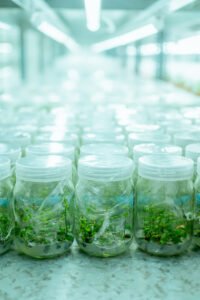
The technical mission allowed the Vitácea Hijuelas team to observe, under real commercial conditions, the performance of several cultivars already authorised for planting in Brazil, including materials for which the group holds exclusive licences for strawberry and blueberry plant production.
This type of international validation is strategic, as it enables the assessment of agronomic performance at large scale, the understanding of optimal management for each cultivar, anticipation of phytosanitary challenges and planning for adaptation to Brazilian conditions (tropical and subtropical).
Technology transfer, in this context, is not direct but adaptive, requiring adjustments in accordance with factors such as climate, soil and local production systems, as extensively discussed in publications by Embrapa and Brazilian universities.


Strengthening the Technological Strategy of Grupo Vitácea Hijuelas
The visit reinforces the positioning of Grupo Vitácea Hijuelas as an active agent in the internalisation of global technologies and their adaptation to the Brazilian context, broadening the portfolio of fruit-growing solutions. The engagement with centres of excellence such as Huelva enables the acceleration of new cultivar introduction, the refinement of production protocols and the evolution of plant and orchard quality established in Brazil.
About the New Plant Production Manager
The group's technical advancement is also supported by the qualification of its team. In this regard, the arrival of Evaldo Melo as Plant Production Manager is noteworthy.

The arrival of Evaldo Melo at Grupo Vitácea Hijuelas as Plant Production Manager reinforces the company's commitment to technical excellence and the integration of science and production. Evaldo is a technician in Agriculture and holds a degree in Agribusiness Management, having pursued his academic formation with a Master's and PhD in Agronomy, specialising in Crop Science with emphasis on fruit plant propagation. Throughout his career, he has accumulated solid experience in leading institutions, with seven years at EPAMIG, at the Grape and Wine Centre in Caldas (MG), in addition to eight years at the Federal University of Lavras, in the fruit-growing sector. He also served for four years at the Federal Institute of Southern Minas Gerais, Inconfidentes Campus, where he coordinated fruit-growing and research programmes. His academic and professional trajectory, recorded with CNPq, demonstrates robust training aligned with the demands of modern fruit growing, bringing to Grupo Vitácea Hijuelas a strategic vision grounded in innovation, plant quality and production efficiency.
Continuous Innovation as a Strategic Pillar
The experience in Huelva demonstrates that the future of fruit growing relies on increasingly: Technified systems, based on superior genetics, sustained by rigorous phytosanitary management, integrated into organised and professionalised supply chains
By closely following these trends, Grupo Vitácea Hijuelas reaffirms its commitment to innovation, constantly seeking new technologies, genetic materials and production models that can be adapted and implemented in Brazil with technical excellence.
The initiative reinforces the group's purpose of acting as a bridge between the world's leading production hubs and the reality of Brazilian fruit growing, contributing to increased competitiveness, quality and sustainability of the sector.
 Português do Brasil
  Español de Chile
  English (UK)